Showing posts with label europe. Show all posts

Friday, January 31, 2020

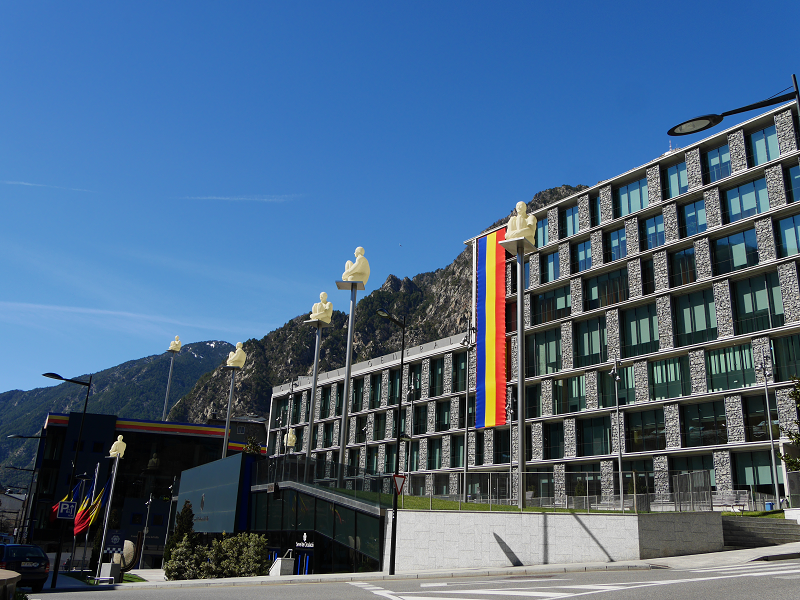
Andorra la Vella

highest capital andorra la vella
Highest capital city in Europe. Capital of Andorra – Andorra la Vella
In accordance with Article 2.3 of the Constitution Andorra la Vella is the capital of the Principality of Andorra and forms one of the seven parishes to which the country is divided.  The settlement of Andorra la Vella has been the principal city of Andorra since 1278 when the French and the Episcopal co-princes concluded an agreement on joint suzerainty.
With an area of 12 km² and a population of 22,886 inhabitants in 2018, it is the smallest parish and the most populated at the same time. It is located at the confluence of the Valira del Norte and Valira d’Orient rivers, where Valira forms, and it is at an altitude of 1,022 m. It forms an urban agglomeration of some 40,000 inhabitants together with the population of Escaldes-Engordany.
Thursday, January 30, 2020

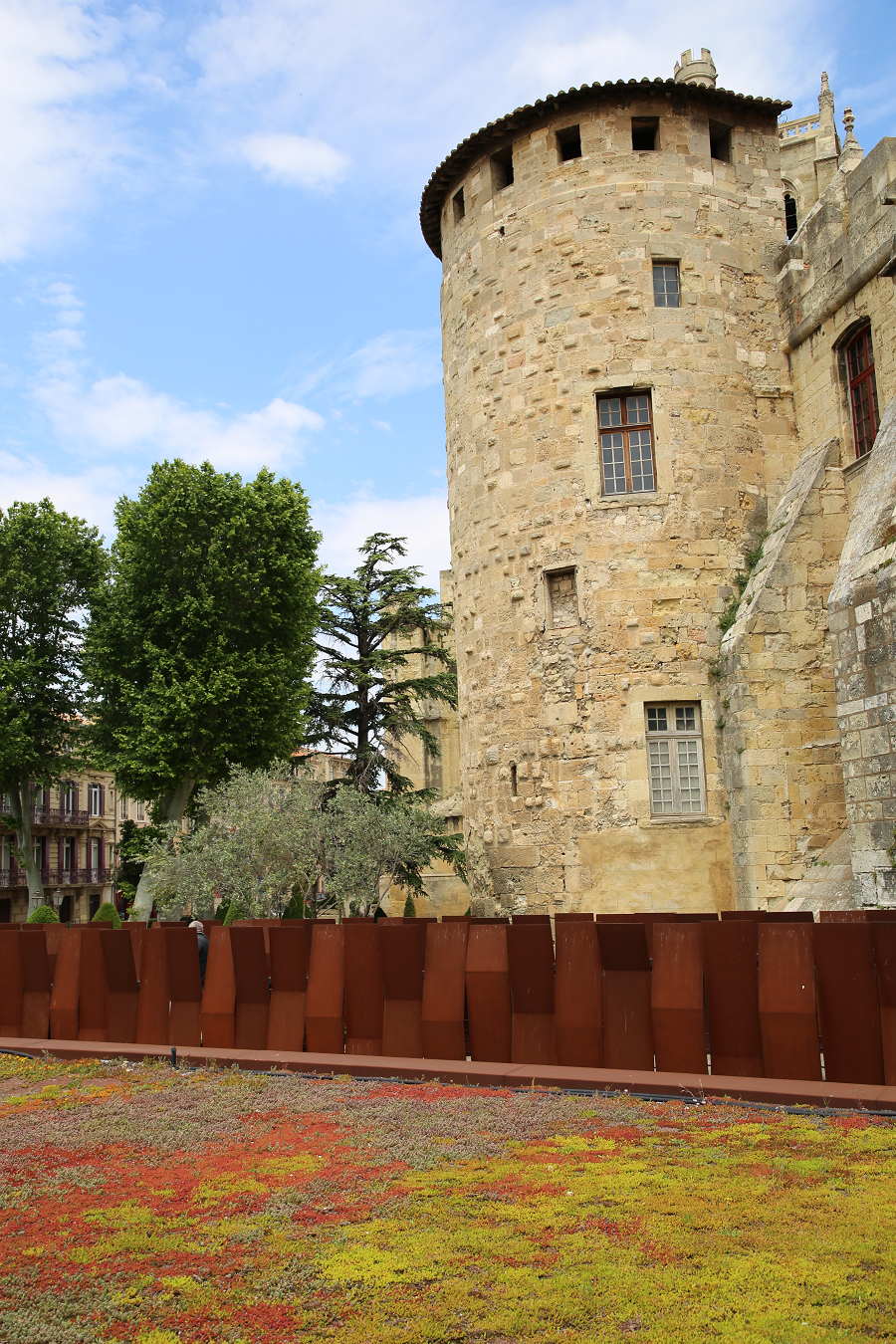
Narbonne

Narbonne (in Occitan, Narbona pronounced [naɾˈbunɔ]) is a city in Languedoc. Administratively, it is a French commune of the region of Occitania, in the department of Aude. With 50,000 inhabitants, called narbonesos, it is the main town of the department of Aude and capital of a district and a canton (territorial subdivision).
In the canton of west Narbonne there are the following towns: Bisanet, Canet, Marcorinhan, Montredon, Mossan, Nevian, Raissac d’Aude and Viladanha (and part of the city of Narbonne).
Most of the city of Narbonne is located in the canton of east Narbonne. In the canton of Narbonne south there is the village of Bajas. In the district there are the following cantons: Coursan, Durban-Corbières, Ginestas, Lagrasse, Lézignan-Corbières, Mouthoumet, East Narbonne, West Narbonne, South Narbonne, Peyriac de Minervois, Sigean and Tuchan. As well as, several natural counties, such as the Narbonès, the Minervois or the Corbières.

Arboç city in Alt Penedès

The municipality of Arboç (cat. Arboç) is located in the eastern part of the region, surrounded by the territories of Castellet and Gornal (Alt Penedès), except for the west where it borders with Banyeres del Penedès and, in a small sector, with Sant Jaume dels Domenys. The exclave of Can Vies (0.3 km ²) is separated by about 1,300 m from the main sector. The exclave is between Castellet i la Gornal, Castellví de la Marcai Santa Margarida and Monjos, in the Alt Penedès and in the province of Barcelona.
The traditional crops are the vineyard and olives, nowadays in sharp decline.
History
It is believed that Arboç was born from a Roman town called Stabulo Novo, located next to the Via Augusta. There are references to Arboç in 991, speaking of the church of Sant Julià, and in 1064 where in a document the word Arbucio appears, which means Arboç in Latin. The history of Arboç is marked by its status as a royal city (not subject to feudal lord), which enjoyed its own concessions and privileges like the Tuesday’s market which dates from the year 1200, the Santa Llúcia Fair from 1230, in addition to having a public notary and a Jewish call, located in the street of the Platería.

Castelnaudary – a French town that was a strategic point during the Crusade against the Cathars

Castelnaudary (fr. Castelnaudary) is a charming town in the county of Cathars, a French commune located in the Aude department in the Occitania region. The town’s location is between Toulouse and Carcassonne in the heart of Lauragais, in the historical and cultural region of the South-West of France called “Pays de Cocagne” or “Granary of the Languedoc” because this area has traditionally supplied grain not only to France but also to its neighbours.
Lauragais is also known for its history, including a religious (Catharism, Protestantism) and very rich heritage: symbolizing the tranquility of the Canal du Midi (a UNESCO World Heritage Site since 1996), abbeys, castles, mills, etc.
Two French rivers, Fresquel and Treboul, alongside the Canal du Midi irrigate the town.
Castelnaudary is located near the watershed of Nauruz (Seuil de Naurouze), the place where the Mediterranean Sea and the Atlantic Ocean waters separate.
The town borders the hills of the Iberian foothills in the South, and the Central Massif foothills in the North.
The municipality area is 47 km2 and the height varies from 145 to 215 meters.
A Mediterranean climate can be found here with the oceanic influence.

The city of Pau has become one of the world’s capitals of developing aeronautics

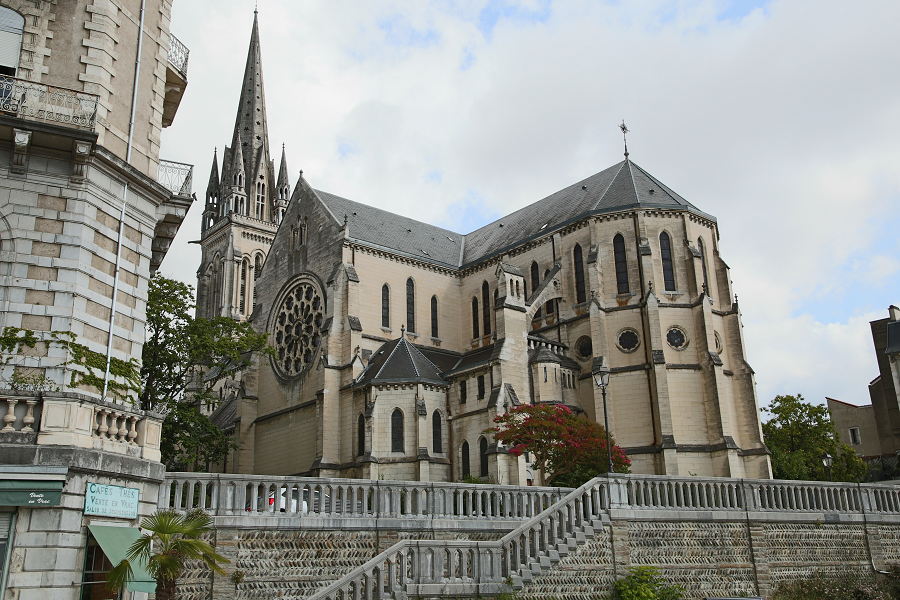
Pau (fr. Pau) is a city and commune in southwestern France, the administrative center of the Atlantic Pyrenees department in the New Aquitaine region. Pau is a city with a rich history. It is called a city with a “magnificent terrace overlooking the Pyrenees” (fr. splendide terrasse sur les Pyrénées). It is one hundred kilometers from the Atlantic Ocean and fifty kilometers from Spain, and this position offers a wonderful panorama on the Pyrenees chain directly from the city center, from the Pyrenees Boulevard (fr. le boulevard des Pyrénées).
Pau is the capital of Bearn, the former sovereign principality, and it is the southern border of the historical region of France with an area of about 4,500 km².
Pau History
Archaeological evidence suggests that this place has been a habitat since the Gallo-Roman era. However, the first memories of Pau as a city date back to the 12th century, in connection with the castle construction, which became then a strategic point on the way to the Pyrenees.

Dax is a “Happy City”, which received such a name due to a large number of healing sources

Dax (fr. Dax) is a commune in the south of France in the Landes department, in the Nouvelle-Aquitaine region. This region is part of the Gascogne historic province.
The region is known for a large number of hot springs. However, not all of them are open to the public. The Dax sources are not spa resorts, but centers of balneotherapy – a physiotherapeutic procedure consisting of treatment with mineral waters and recommended only by doctors.
Dax sources were incredibly popular with the Roman rulers. Healing springs became available for ordinary people only in the XVIII century and Dax received the second unspoken “Happy City” name at that moment.
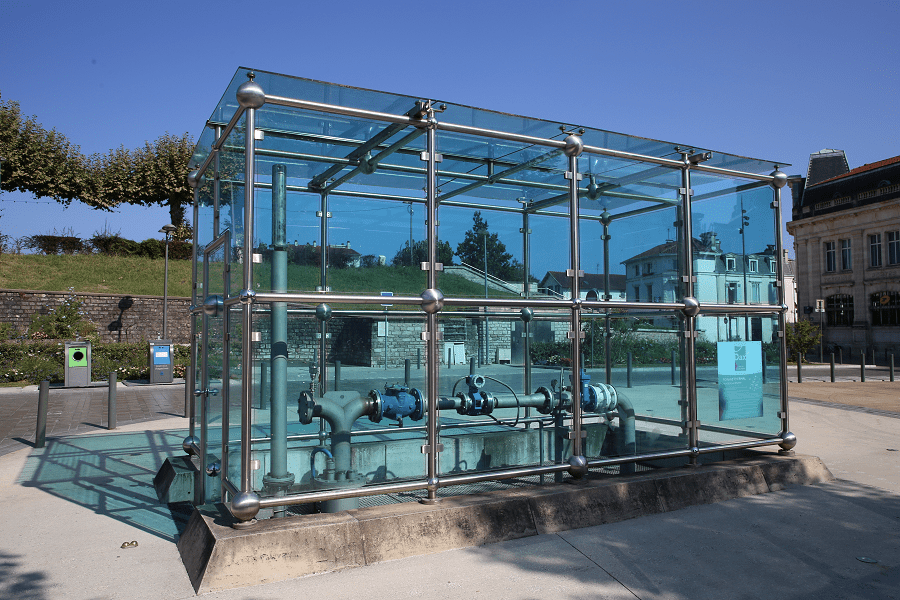
There are about 18 thermal stations with therapeutic mud as well as hotels and resorts almost throughout the city. Thanks to the nearby Adour River, Dax produces about 1,500 tons of therapeutic mud annually, being the largest European supplier.
The town of Dax’s emblem depicts a tower (a symbol of a fortified town), a lion (a symbol of Aquitaine), and waves (the Adour River, which has its own river port). The town’s motto – “Regia Semper” (“Always Royal”) – is the motto of a free town which has always been under royal tutelage.
Climate
The climate is typical of the entire Atlantic Ocean coast here but it is hotter in summer and cooler in winter than in the Bay of Biscay. Summer is hot and long, autumn is very mild and rather sunny, winter is warm but rainy, and spring is late (May is not warmer than October) and very rainy.

The history of Catalan art

Catalan art has gone through a parallel evolution to that of the rest of Europe, following in a diverse way the multiple tendencies that emerged in the context of the history of Western art. Art has always been one of the main means of human expression, allowing humans to communicate ideas, feelings and their relation to the rest of the world. Its function can vary from the most practical to the most ornamental; It can have religious or simply aesthetic content, it can be lasting or ephemeral.
Throughout history, Catalonia has welcomed various cultures and civilizations, that contributed their concept of art and left their legacy. Each historical period has had specific and definable characteristics, that have been evolving over time, some common to other regions and cultures, while others were different and unique. This lead to the development of various artistic styles that may have a geographical or temporal origin, or just as well, be reduced to the work of one artist in particular always when clearly defined artistic forms are produced.
Catalan art is the result of the social and cultural amalgam brought about by the diverse peoples that inhabited the Catalan territory. The first prehistoric settlers were succeeded by Celts and Iberians that arrived during the Metal Ages (protohistory); these were later replaced with the first colonizers from Mediterranean civilizations, the Greeks; then the Romans arrived, who converted Catalonia into yet another province of their empire; after its fall, Catalonia was part of the Visigothic kingdom, and later suffered the Islamic invasion. The Middle Ages were the beginning of Catalan culture as a separate defined entity, with its own language, heiress of Latin, and the formation of the first Catalan state. It was a time of splendour for Catalan art, the Romanesque and Gothic periods were very fruitful for the artistic development of the Principality of Catalonia.

Catalan cuisine is part of Mediterranean cuisine and its typical example

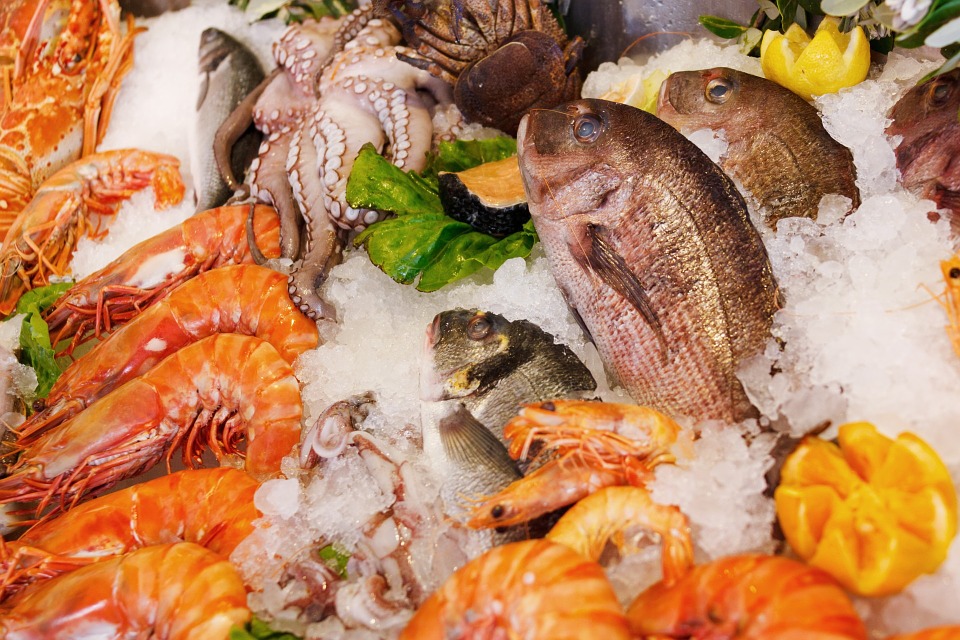
Catalan cuisine is part of Mediterranean cuisine and its typical example. Most often references are made to the food of Catalonia and Northern Catalonia, and occasionally Andorra but some contemporary authors like Josep Pla, Jaume Fàbrega, Eliana Thibaut i Comalada, Ferran Agulló and the English-language writer, Colman Andrews, talk about shared gastronomy throughout the Catalan cultural area, including the Valencian Community, Balearic Islands, La Franja and Andorra, and therefore it would be best referred to as the cuisine of the Catalan Countries.
Other authors consider, however, that there are different Valencian and Balearic cuisine. On the other hand, the governments of the Valencian Community and the Balearic Islands, do not support this interpretation, although they do not declare otherwise, while the Generalitat de Catalunya gives various views depending on the source consulted.
On the other hand, it is worth mentioning the local presence of, to varying degrees, different cuisines, such as xurra (from the comarques xurres of Valencia and Canal de Navarrés), castellana (from Baix Segura, the Vall de Cofrents and La Plana from Utiel, as well as parts of Alto Vinalopó, Vinalopó Mitjà) and Occitan cuisine from the Vall d’Aran and Fenolleda. It should be also added that Catalan cuisine has left its mark in Murcia thanks to its historically Catalan population and the historical contact between Murcia and Valencia.

European best wines: winery of Andorra

best wine
European best wine: winery of Andorra 
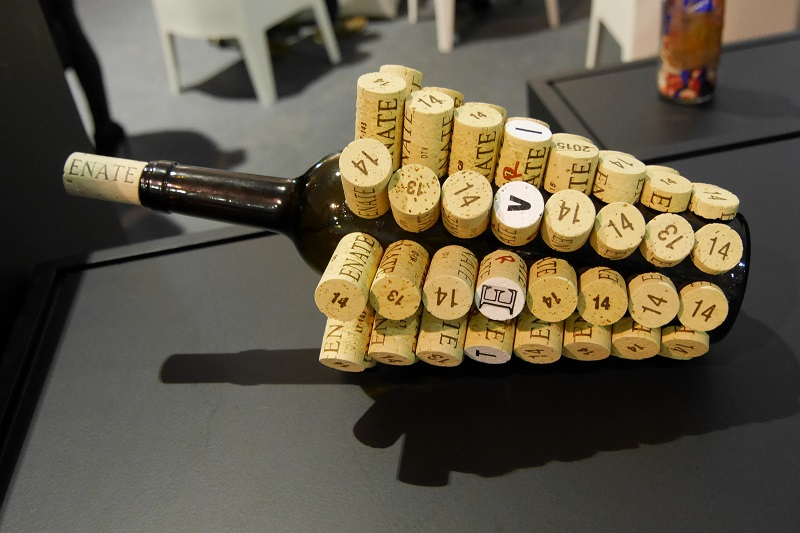
 Celler Mas Berenguer is a small family winery located in Sant Julia de Loria. The history of this family goes back to the past. It is known that the production of wines of this family was suspended in the 18th century. However, in 2011 wine tradition was resumed since then the Andorran wine makers producing wine from high altitude vineyards Pinot noir, Chardonnay and Sauvignon blanc.
Casa Beal – winery of family Visa – Tor resumed its activity in 1988, after more than a century of interruption. After years of experiments and research, in 2004, were replanted with new vines. In 2006, the winery introduced its first wine of the 21st century. The grape variety Gewürztraminer is ideally suited for loamy soils Andorra, which are formed due to decomposition of the shale. One of the secrets of Casa Beal is in the approach to the cultivation of grapes – it clearly corresponds to the phases of the moon. Location also plays an important role  – the vineyard is located at an altitude between 1050 and 1100 metres above sea level. Winery Casa Beal focused on the production of white wines.