Showing posts with label nutrition. Show all posts

Thursday, January 30, 2020

What products will replace sleeping pills?

Toss and turn in bed at midnight, but can’t sleep? Before you start taking pills, try natural sleeping pills. This is what my post is about today.
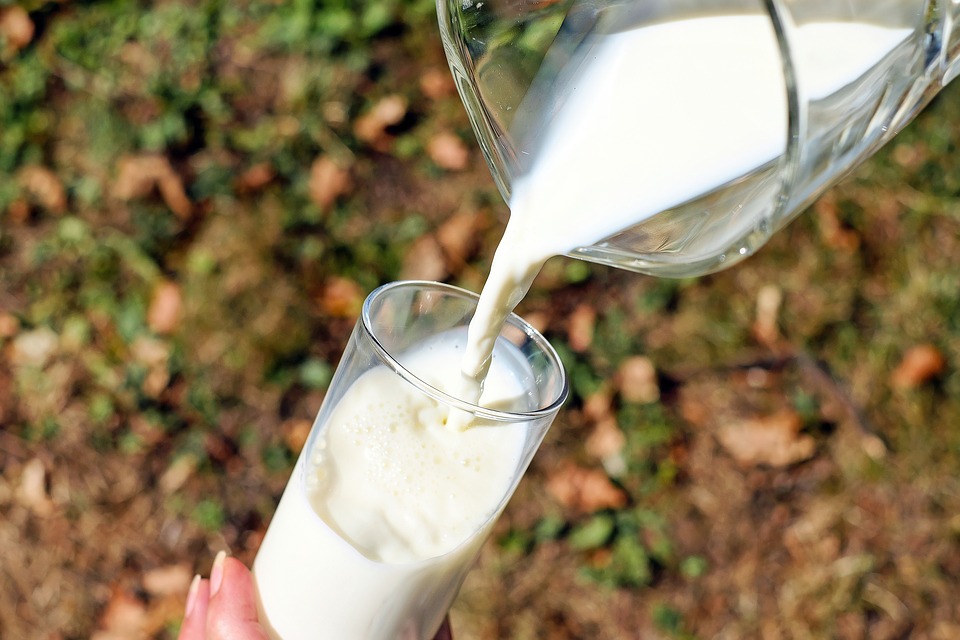
Milk has traditionally been used for this purpose, very often by grandmothers. A glass of warm milk with a drop of honey soothes not only our childhood memories but also due to the content of tryptophan. It is needed for the formation of melatonin – a hormone that soothes.
Some foods can improve the quality of sleep, others improve sleep. Products containing magnesium and potassium increase the concentration of melatonin.
Why not use some products to help with sleeping instead of pills?

An eating disorder: how does it look like?

An eating disorder: how does it look like?
Basically, the desire to get the same body as the models from the covers of magazines does not lead to anything good.
According to the World Bank, in North America for example, about 30 million people suffer from eating disorders. Sometimes the symptoms are disguised as healthy habits, and if they are not detected on time, this can lead to trouble. This is what my post is about today.
1. You constantly think about food.
It doesn’t matter if you want to eat every minute or if you just strictly control food intakes – this is the same thing because you constantly think about food. The number of calories, when and how much to eat, and which products are bad for you – if you live that way, then this is one of the symptoms of an eating disorder.
2. You only cook complex dishes for guests
Those who do not allow themselves to eat tasty and special food often show tend to prepare it for other people instead. This is a symptom of eating disorders – if you can spend hours cooking something amazingly tasty for your loved ones, and at lunch you only eat a tomato salad.

Intuitive nutrition: seven secrets

Intuitive nutrition: seven secrets
Intuitive nutrition is a system that does not involve dieting or severe dietary restrictions. This principle of nutrition has helped many people to reach their desired shape, get rid of food addictions and “make peace” with food. So, what is this magic method?
For the first time, the concept of “intuitive nutrition” was introduced in 2005 by American professor Steven Hawks, when, after conducting a study on himself, he managed to lose 23kg. Intuitive nutrition includes several rules, but these rules have nothing to do with the rules of diets or other food systems. This is what my post is about today.
1. Learn to feel hunger
Hunger is a condition of the body in which the stomach remains almost empty, requiring new portions of food.
Frequently, people confuse physical hunger with psychological hunger. Indeed, many people are accustomed to eating when they experience some kind of emotional feeling or are with company, that is, during moments when external or internal circumstances force one to eat. But this hunger is always sudden and depends on the circumstances, while physical hunger, which occurs gradually, is accompanied by a rumbling sound and a feeling of emptiness in the stomach.

Champignons and weight loss: nutritionists’ opinions and recommendations


Champignons have long been attributed as popular products and indispensable ingredients in a variety of dishes. However, it makes sense to ask the question: how appropriate are these mushrooms for diet programs? Their qualities, which make it possible to quickly cope with the feeling of hunger, make it possible to judge mushrooms as diet foods. This is confirmed by other properties. This is what my post is about today.
Champignons are rich in valuable components for the body. First of all, we are talking about vitamins. This applies to ascorbic acid, vitamins Bs, as well as fat-soluble cholecalciferol and ergocalciferol (vitamins from group D). In addition, a large number of fatty acids and a modest content of carbohydrate components in the composition of mushrooms complement their beneficial properties.
Mineral substances, as well as compounds on the basis of which proteins are formed, are also an important component of these fungi. Mushrooms also have a fairly large amount of phosphorus compounds, and this, in turn, gives them the qualities that seafood also has.
Since champignons contain vegetable protein, it is justifiable to include such mushrooms in weight-loss programs for vegetarians too. As a result, the muscles and their tone will receive proper support. This protein serves as a substitute for the proteins that make up meat products.
The content of sugary components in mushrooms is extremely small. As a result – a short list of contraindications to the use of these mushrooms for dietary purposes can be found. Moreover, they can be included in diabetic’s diets too.

Food from the microwave. Are microwave ovens dangerous?

Food from the microwave. Are microwave ovens dangerous? What is a microwave and when was it invented?
Microwave ovens have taken a strong position in our kitchens. They significantly speed up the preparation and heating of food. Together with the undeniable merits of microwaves, their harmful effects on humans are also discussed. This is what my post is about today.
The history of microwave ovens
The very first patent for a microwave was issued back in 1946 in the USA. The world’s first microwave oven Radarange was released in 1947 by Raytheon and was not designed for cooking, but for the quick defrosting of food.
The installation was used only in the military. The size of the system was impressive – about the height of a person.
The mass of the furnace reached 340 kilograms. The initial power was 3 kW. The installation went to the serial production only in 1949. The official price in 1949 was $3,000.

Beware of nitrates in food!

Beware of nitrates in food!
Imagine a summer morning in a picturesque village. You wake up from the gentle touch of the sun’s rays, the ceremonial crowing of the neighbor’s rooster welcomes you, and your legs are already rushing out of the house towards a new day …
How great it all is! The garden in the backyard is full of bright red cherries, and the leaves of the lettuces and parsley are green … This is a vitamin paradise!
This is what we have in our minds, but, unfortunately, we are led to disappointment. The culprit? Tiny molecules of nitrates … This is my post today.
What are nitrates?
Nitrates are compounds (salts) of metals which contain a residue of nitric acid (HNO3). In solutions, nitrates are, as a rule, represented by negatively charged particles — nitrate anions (NO3–), which contain three oxygen atoms and one nitrogen atom.
It is nitrates that are the main form in which mineral nitrogen is absorbed by plants from the soil. After absorption, nitrates are included in reduction reactions, the purpose of which is to obtain ammonium ions (NH4 +). A simplified diagram of this process is as follows:
NO3- → NO2- → NH4 +
Why precisely ammonium? It’s simple. Recall that proteins, one of the most important classes of organic compounds, are composed of amino acids. Amino acids, in turn, are nitrogen-containing molecules. To build an amino acid and, accordingly, protein, the body needs nitrogen. It so happens that nitrates containing nitrogen cannot be involved in the synthesis of amino acids, but ammonium can. So the plant has to first absorb the nitrates and then turn them into ammonium. Alas, this transformation is not an instantaneous matter; therefore, nitrates can accumulate in the plant’s body, and we, in turn, eat them.

The benefits and recipes for making the perfect breakfast

The benefits and recipes for making the perfect breakfast
Breakfast, no doubt, is the most important meal of the day. You can sometimes skip lunch or dinner, but breakfast, by no means. This is what my post is about today.
The fact is that during the night’s sleep, our body also actively works and uses up energy, and a full breakfast is needed precisely in order to replenish these energy reserves. In addition, many studies show that people who eat breakfast regularly are sick far less frequently, have stronger immune systems and live longer than those who do not eat breakfast at all. In addition, skipping morning meals significantly increases the risk of cardiovascular diseases and diabetes. A big plus of eating breakfast is that in the morning you can eat almost everything, that is, you don’t need to check the calories or sugar content in foods since it is in the morning that the body should receive approximately 40% of our daily calorie intake.
So what exactly should we eat for breakfast? There are many opinions, one perfect breakfast for everyone does not exist, the most important thing is that your breakfast is healthy, has a high-calorie content and is balanced because it will serve as our energy source for the whole day.