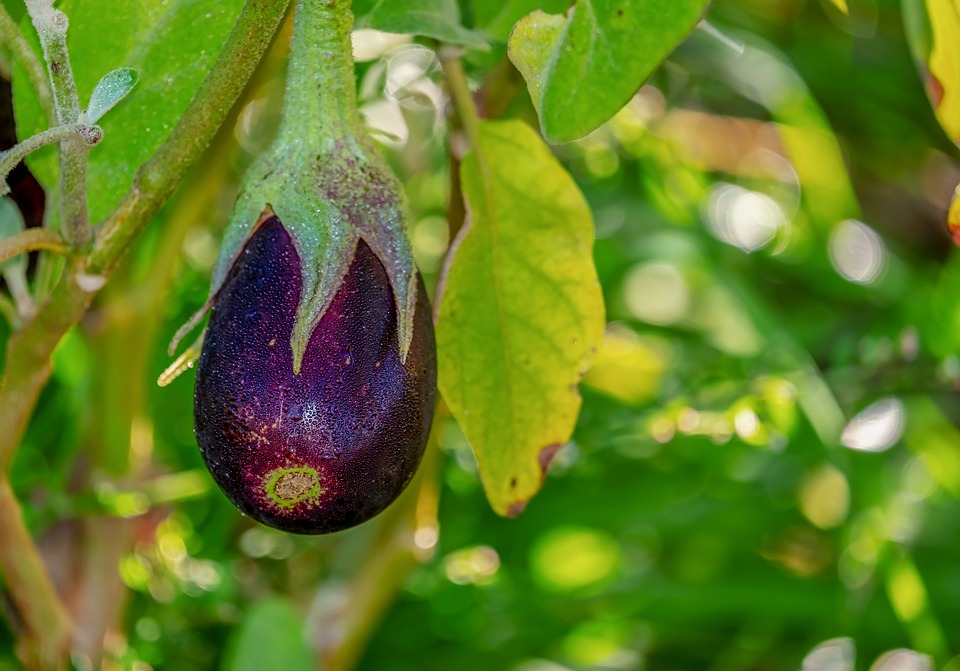
All about eggplant (aubergines)
Eggplant is the king of the garden. This vegetable has purple-black color with a glossy shine and a cap that looks like a crown, so it really does look like a king. And even the royal family will appreciate its taste! Delicious Parma-style eggplants, stuffed or fried – these vegetables will always make a splash on the table. This is what my blog is about today.
Start growing eggplants:
Eggplant has been around for a long time. They came from India, but they were also eaten in Arabia, where sheikhs and shahs highly valued them. The Arabs introduced them to the people of Spain, who later brought them to this country, and by 1806 they grew both purple and white varieties.
One of the earliest references to eggplant is in a Chinese book from the fifth century. It seems that Chinese women considered it very fashionable to paint their teeth with black eggplant dye. Then they polished their teeth until they began to shine like metal.
But eggplant as a food or fashion accessory was not popular everywhere. In Europe, in the 15th and 16th centuries, eggplants were called “insane apples” because it was believed that eating them made a person crazy. Even when this fear began to fade, the Europeans still refused to eat eggplants, as they considered them poisonous. The eggplant is a member of the Solanaceae family, as are tomatoes, potatoes, tobacco, and belladonna. Eye drops obtained from belladonna (also called the deadly nightshade) were used by fashionable women to visually enlarge the eyes. From time to time someone who used the belladonna died from the effects of poisoning. Not surprisingly, by associating eggplants with deadly nightshade, people avoided eating them.
