Showing posts with label animals. Show all posts

Thursday, January 30, 2020

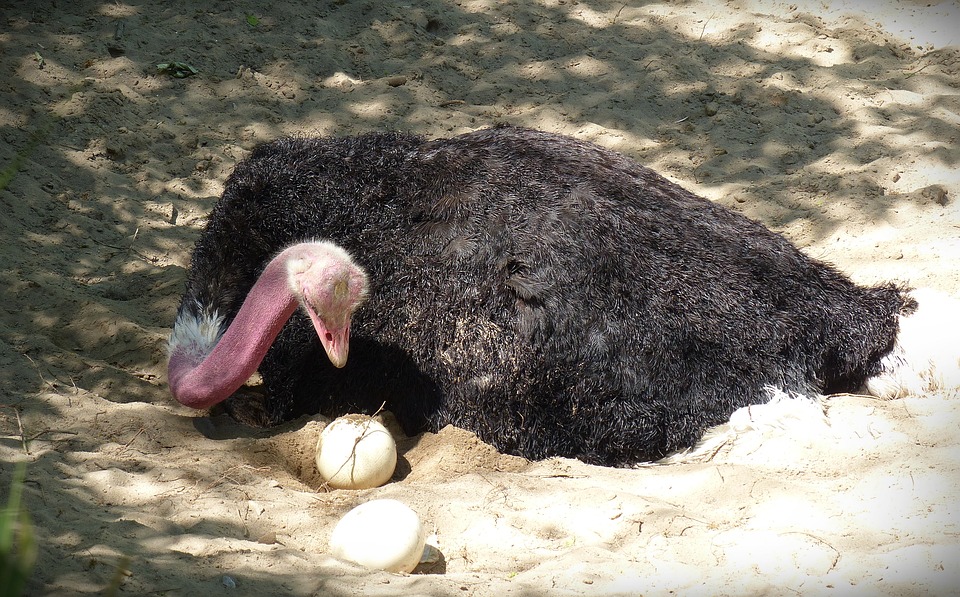
Useful properties of ostrich eggs

Useful properties of ostrich eggs
Over the past few years, ostrich eggs have become in demand among the population of Eurasia and America. Some people eat them to be fashionable, and others eat them because of their useful properties. You can buy such a delicacy on special ostrich farms, the number of which grows over the years in almost every city in Europe and Asia. This is what my blog is about today.
Only unfertilized eggs are used for food. Ostriches, as a rule, lay eggs in the warm season, so in winter this delicacy is almost impossible to purchase.
Ostrich eggs have an average weight of 1 to 1.5 kg, which is 30-35 times more than the usual chicken egg. The color of the shell depends on the breed of the bird and varies from pinkish-yellow (in Nanda ostriches) to black-green (in Emus ostriches). The protein has a transparent color, similar to that of other birds, and the yolk is a much richer, brighter yellow.
Like any other eggs, ostrich eggs are rich in protein and fats, which are primarily involved in the building of cells in any organ of the human body. Unlike normal chicken eggs, ostrich eggs are completely devoid of harmful substances, because ostriches are fed with high-quality food and they will not consume contaminated food. A 1600 g egg contains 1 kg of protein and 330 g of fat. One adult person for consumption of the daily rate of the main food components needs 100 g of such eggs.

The fauna of Catalonia

The fauna of Catalonia is largely composed of a combination of a minority of endemic animals of the region and a majority of animals that are also present in other places. Most of Catalonia enjoys a Mediterranean climate (except mountain regions), which means that many of the animals that live there are adapted to the Mediterranean ecosystems. Human activities have endangered the animal biodiversity of Catalonia, putting some species in danger and destroying others, such as the gray wolf or most likely the brown bear. On the other hand, the government has also delimited protected areas in order to preserve the natural wealth of Catalonia.
Catalonia is located, in its entirety, within a Palearctic realm, the largest of the eight ecozones that divide the surface of the Earth. Within the Palearctic realm, Catalonia is part of the ecoregion of the Mediterranean basin, like other parts of southern Europe, North Africa and the western part of Asia. In this ecoregion, winters are generally mild and rainy, and summers are hot and dry. The mosaic of forests, shrubbery and scrubland of this ecoregion houses 13,000 different endemic species.
However, the Mediterranean basin is also one of the most threatened biogeographic regions in the world; only 4% of the region’s vegetation is left, and human activities, including overgrazing, deforestation, and the transformation of lands to create pastures, crop fields or urbanized areas have degraded much of the region. In ancient times, the region was largely covered by forests and bushy areas, but the intense human action has reduced the majority of the region to areas of sclerophyllous vegetation such as: chaparral, subshrub or garrigues. Conservation International has pointed to the Mediterranean basin as one of the key points of biodiversity.
Reptiles and amphibians
Many species of this group have been reduced to small and fragmented populations, others remain without many problems. They are species with low migration capabilities and therefore are very vulnerable to fires, such as the Mediterranean turtle. Aquatic species, on the other hand, suffer from water contamination and the competition from invasive alien species, like in the case of frogs, water snakes, pond turtles and Spanish pond turtles.